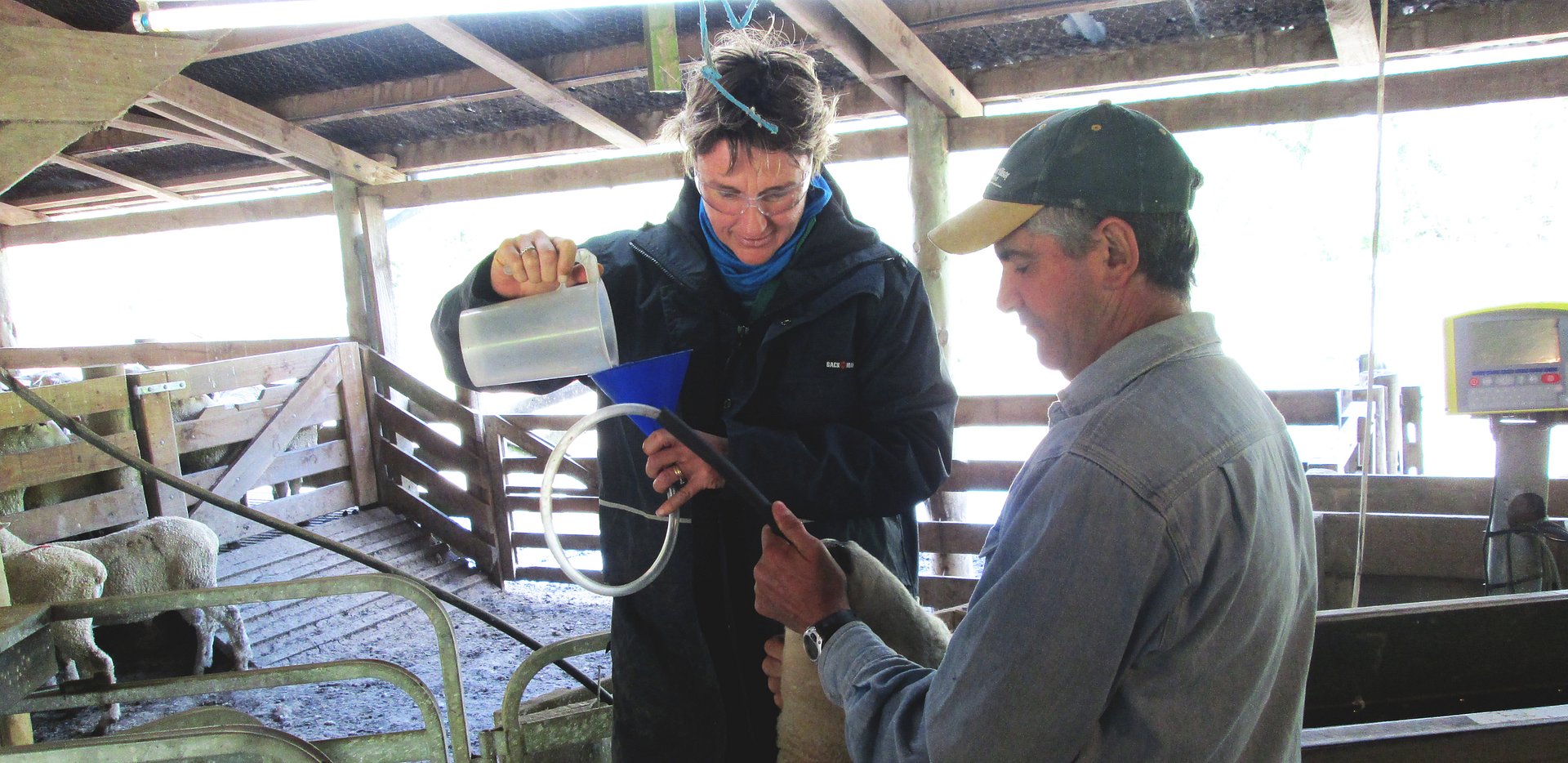
Vet Rachel Cashin and Stud Manager Seymour Spence administering a dose of sporidsmin
Lifting Facial Eczema Tolerance
Paparata Elite Romney - Focused on building FE Tolerance
Extract from the Beef and Lamb resource book 'Facing Up To Facial Eczema'.
‘The liver damage associated with FE results in production losses that are much greater than may first appear. Even when no symptoms are visible, FE can reduce lifetime productivity by up to 25 per cent’.
‘Breeding for increased tolerance to FE should be your first line of defence’.
Why lifting FE tolerance is a smart idea for all sheep farmers:
Lifting the FE tolerance in your sheep is essential for farmers farming in an eczema prone area. A live sheep is always going to outperform a dead one.
If you do not farm in a FE prone area 'look out' the climate is warming and eczema is creeping down the country. Buying rams with FE tolerance could protect your flock in the future.
If you think you will never be threatened by FE then it also makes sense to lift flock tolerance levels. You have a larger market when selling store. Those farmers farming in a FE prone area will not buy lambs that do not have FE tolerance. You have a marketing advantage.
Paparata FE Tolerance Building Programme.
Paparata has been building FE tolerance since 1999.
All bought in sires need to have been tested at a high level
Bought in sires are sourced from flocks with a long history of testing
All home bred sires are tested and only used if they show a nil rise
We have seen no cases of FE on Paparata for a number of years
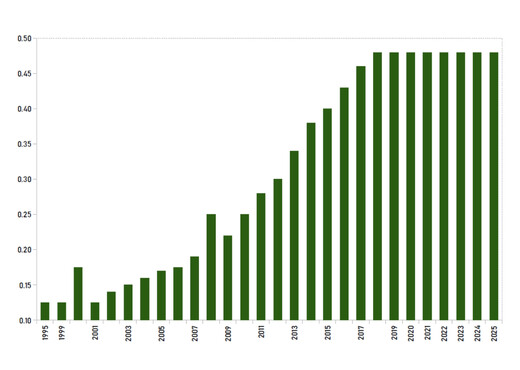
In 1999 a testing programme was begun on the high ranking home bred rams to check their tolerance levels. Those rams showing the highest tolerance levels are used over the recorded flock. The dose rate has moved up over the years as the flock tolerance levels moved up, although this took time, as can be seen in the graph above.
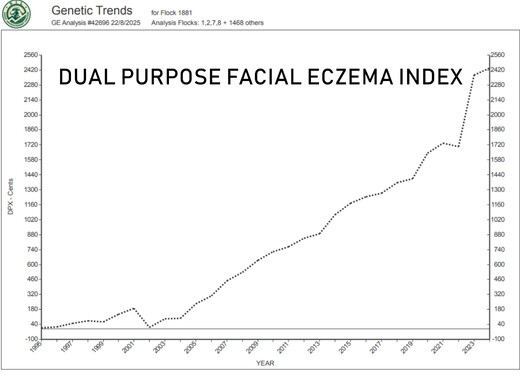
Testing provides all sheep in the recorded flock with a FE production index. Sale ram FE indexes are provided in the catalogue. The higher the index the greater the FE tolerance level. The graph above shows the genetic progress that Paparata has made for facial eczema.
Last year the dose rate was 0.48. Our target is 0.5.
New DNA technology means potential sires can now be screened for FE tolerance before being dosed with sporidsmin. This should mean larger increases in the testing level each year.
Testing for FE provides all sheep in the recorded flock with a FE production index. The more positive the index the greater the forecast FE tolerance. Indexes for sale rams are provided in the catalogue.
Good questions to ask a ram breeder.
How long have you been testing for FE? Needs to be more than 10 years.
Are all your sire rams FE tolerance tested? They should be.
What level do you test at?